In 2000 the Knesset set up a parliamentary inquiry to locate and restore the assets of Holocaust victims. The accounting firm Kaspi & Kaspi was appointed to examine Bank Mizrahi. The audit ran from December 2001 to July 2003 with a team of about 12 people.
Early in their report the auditors wrote one sentence worth reading slowly (translated from Hebrew): "We wish to stress that at the first meeting with the bank's management we were told that the bank had no material at all relevant to the audit, and that we would find nothing in the course of our work."
In brief
- The first claim: the bank had "no material at all". That is what the auditors were told at the first meeting.
- What was actually found: the original shareholder registers, customer account cards from 1936 to 1974, signature specimen cards, management minutes and letters from 1939 and 1940.
- What was lost: until 1979 "no rules for keeping banking material were set". Records sat in damp basements, and every branch destroyed old material to make room.
- 1974: when the branches were computerised, the date of entry was recorded as the date the account was opened. According to the auditors, historical data was "lost with no way to restore it".
- 2012: the bank paid 9.5 million shekels to the Holocaust victims' assets restitution company, "without admitting any liability".
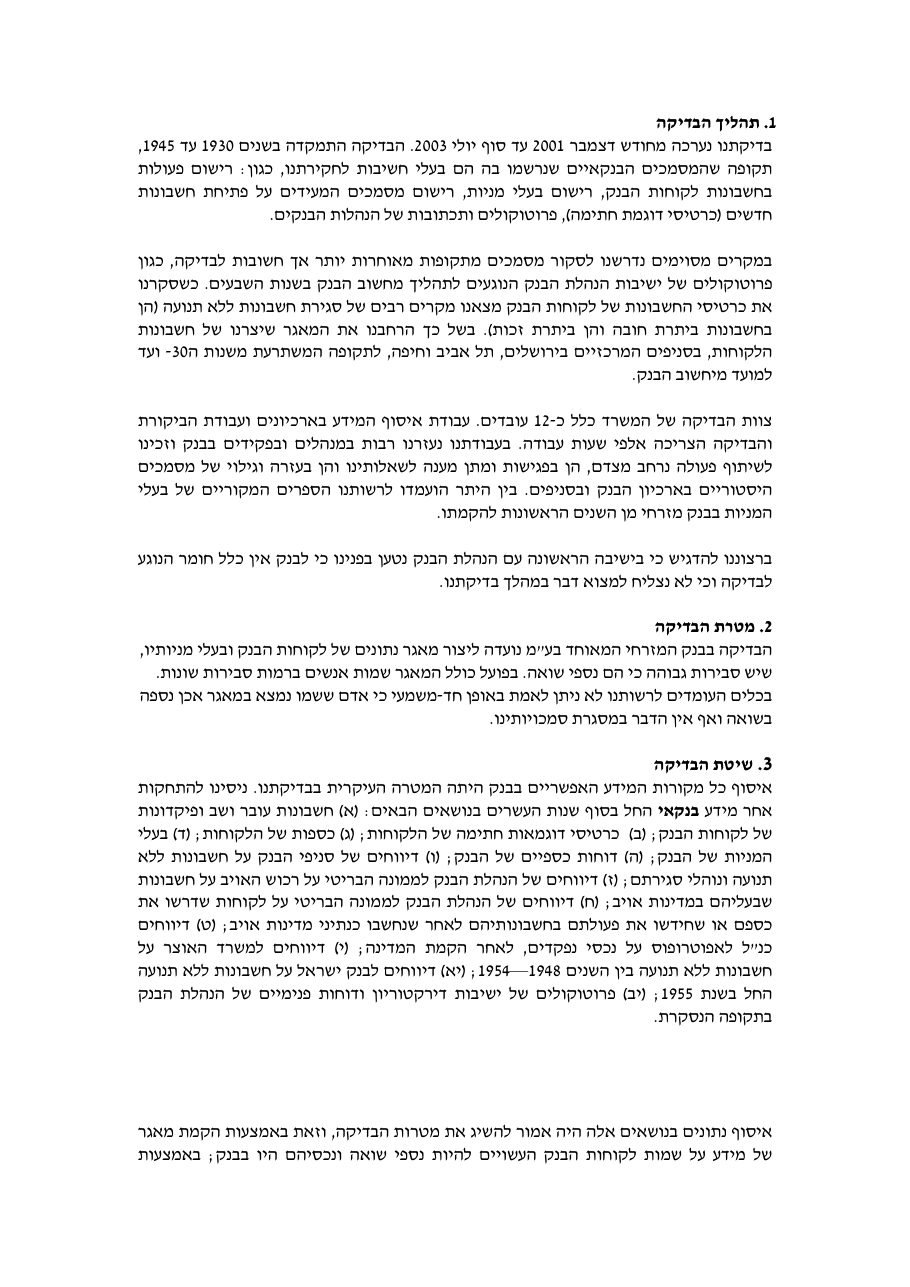
What turned up after "no material at all"
In the same paragraph the auditors wrote that they later received "broad cooperation" from managers and clerks, and were given "the original shareholder registers". Their list of sources includes:
- Customer account card ledgers from 1936 to 1974. From these they built a database of about 7,892 dormant accounts, of which, they wrote, "162 may belong to Holocaust victims".
- About 155 signature specimen cards from 1930 to 1945.
- Shareholder registers from 1925 to 1977: 8,082 shareholders, 309 of them with addresses in Europe.
- Minutes of management meetings since 1924, and financial statements from the 1930s and 1940s.
In other words, the material existed. Some of it was in the archive, some in the branches.
When do records usually "disappear"? Three moments from the report
1. When there is no retention rule
"We stress that before the bank's archive was established in 1979, no rules for keeping banking material were set. As a result most of the bank's records were stored in branch basements in damp conditions, which ruined them."
2. When space is needed
"Every branch destroyed old material to make room for new, without considering the historical significance of losing the records." And: "Records kept in good condition were moved to the bank's archive, and records eaten by mould and damp were destroyed."
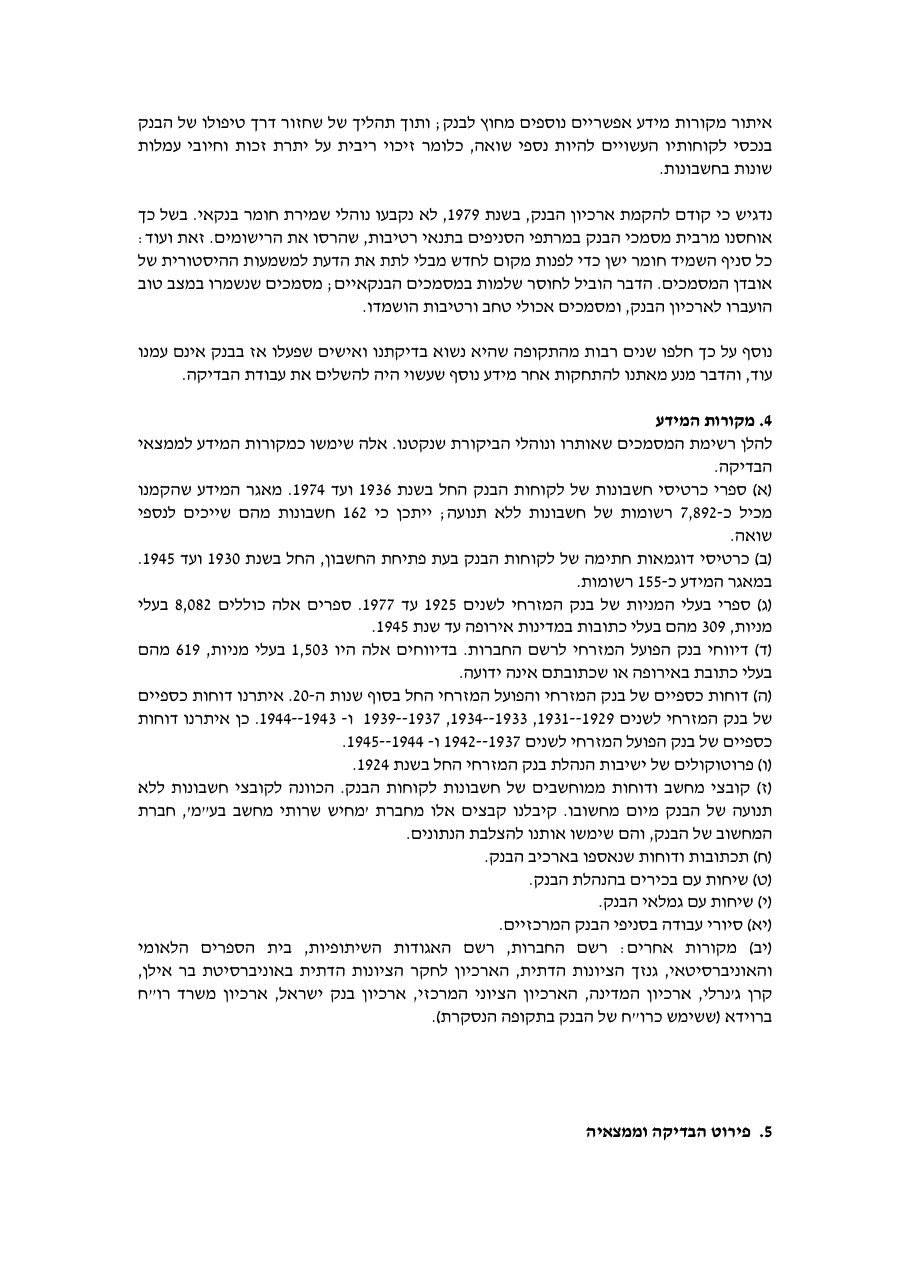
3. When the bank goes digital
Branch computerisation began in 1974. According to the auditors, "it was decided to set the date of entry into the computer as if it were the date the account was opened, and the balance on that day as if it were the opening balance". The result, in their words: "historical data of great importance, in all customer accounts on the computer, was lost with no way to restore it."
Put simply: from then on, an account opened in 1938 looked on the computer as if it had been opened in 1974, with no earlier history.
Why it matters
The audit was about money belonging to people who could not come and ask for it. A letter dated 29 October 1939, quoted in the appendix, refers to deposits of about 28,000 Palestine pounds: "the depositors cannot claim their deposits at present, being abroad". When such records vanish, so does the ability to prove who the money belongs to.
The inquiry found 383 account files of possible victims. For 11 accounts located in the Central Zionist Archives it attributed to the bank almost all of the liability it calculated. The bank disputed the findings.
And the bank?
- 2010: in its annual report the bank wrote that it "disputes the findings of the committee's report".
- 8 May 2007: the bank told the restitution company that "it does not hold property of Holocaust victims".
- 2008 and 2009: the company demanded about 18 million shekels, then about 19 million. The bank refused, and in May 2009 "demanded that it withdraw its demands immediately".
- 4 November 2012: a settlement. According to the annual report, "without admitting any liability or claim of any kind raised against the bank", the bank paid 9.5 million shekels "in full and final settlement" of claims, including ones "not known that will only be discovered in the future", and "the bank's responsibility ended".
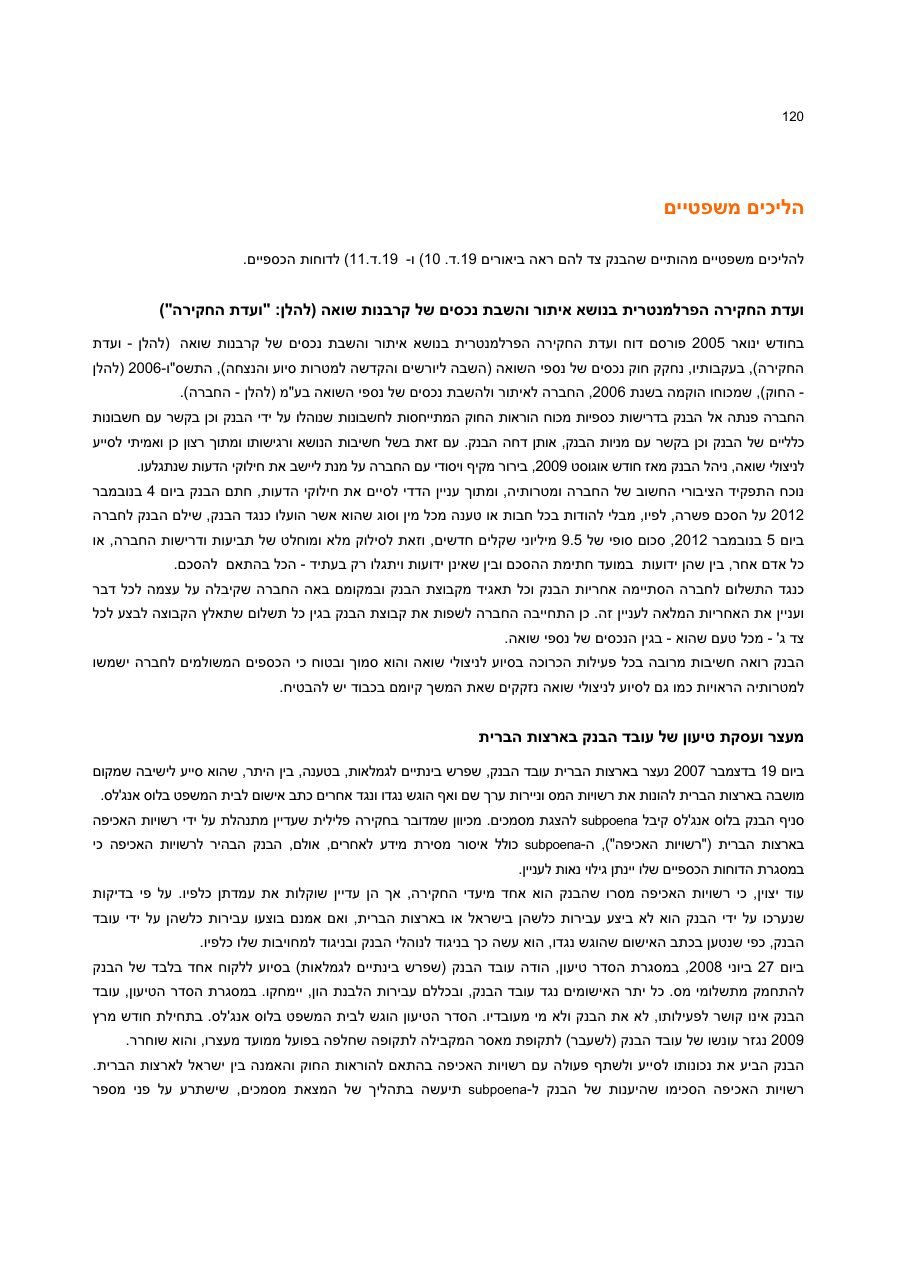
What we do not know
- The full text of the settlement has not been published. What is known comes from the bank's description in its annual report.
- The auditors attribute the loss of records to the absence of retention rules and to damp. The report does not find that records were destroyed in order to hide anything.
- The bank was not convicted, was not sued in court over this, and did not admit liability.
The documents
- Appendix 3 to the inquiry report: the Bank Mizrahi audit, selected pages (PDF, Hebrew)
- Inquiry final report: Bank Mizrahi pages (PDF, Hebrew)
- Mizrahi-Tefahot annual report 2012, page 120 (PDF, Hebrew)
- Mizrahi-Tefahot annual report 2010, page 102 (PDF, Hebrew)
- Full report on the Knesset website
Based on official documents: the parliamentary inquiry report and its appendices, and the bank's annual reports. Quotes are translated from the Hebrew originals. This is not legal advice.